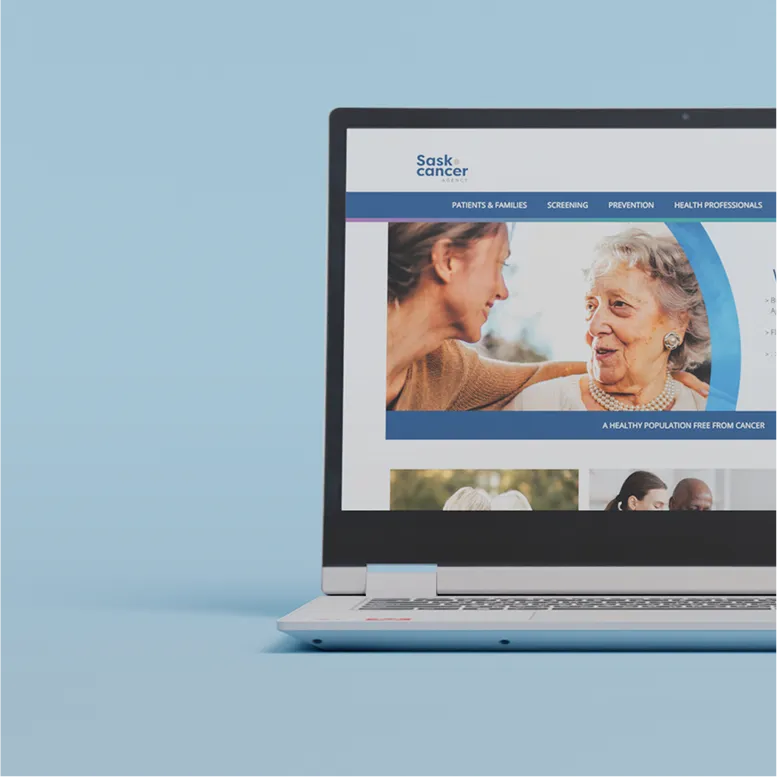
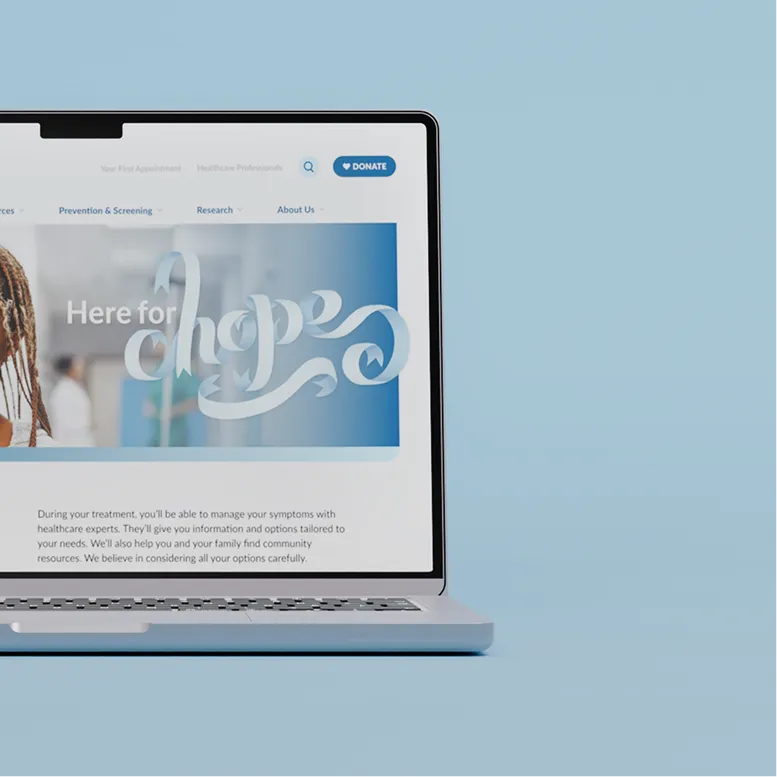

A unified Drupal multisite ecosystem serving three web properties for Saskatchewan cancer care, prioritizing patient clarity on the public site while enabling secure staff collaboration and research participation through shared technical foundation.
The Saskatchewan Cancer Agency (SCA) delivers cancer care, treatment, and prevention services across the province. It’s a complex system, serving patients, families, clinicians, and internal teams, all at once. We partnered with SCA to rethink that system digitally. Not just a website refresh, but a connected ecosystem: public site, staff intranet, and a prevention-focused microsite (Healthy Future's Saskatchewan). The goal was simple on paper. Make it easier for people to find what they need during challenging times, and give internal teams a platform that actually works the way they do.
The experience had grown uneven over time, shaped by different audiences and needs but without a clear structure holding it together. For patients and caregivers, that meant friction at the moments that mattered like, finding parking, booking appointments, or understanding your next step in the process.
Internally, the same issues showed up in different ways. Systems didn’t connect, content was hard to maintain, and governance struggled to keep pace across teams and sites. SCA isn’t serving a single audience. It supports patients, families, clinicians, researchers, and staff, each with their own expectations, and the existing structure wasn’t built to handle that range.
We started by listening. Stakeholder interviews, patient feedback, and internal workshops gave us a clear view of how the system was actually being used, where it was breaking down, and where frusteration occured. From there, we simplified information architecture and pathways, and reworked content to remove noise, rewer clicks, provide clearer routes, and direct people to what they actually came for.
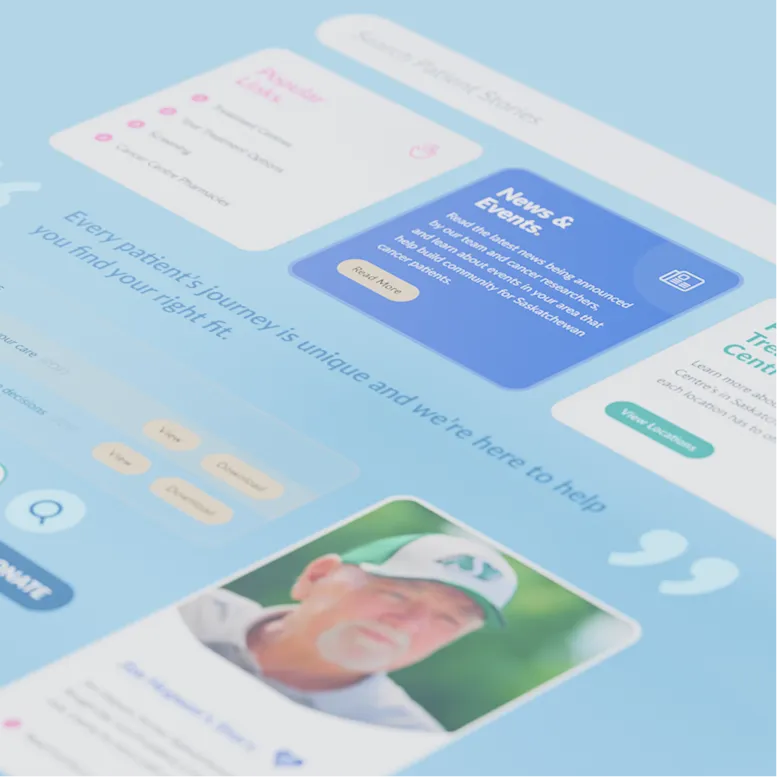
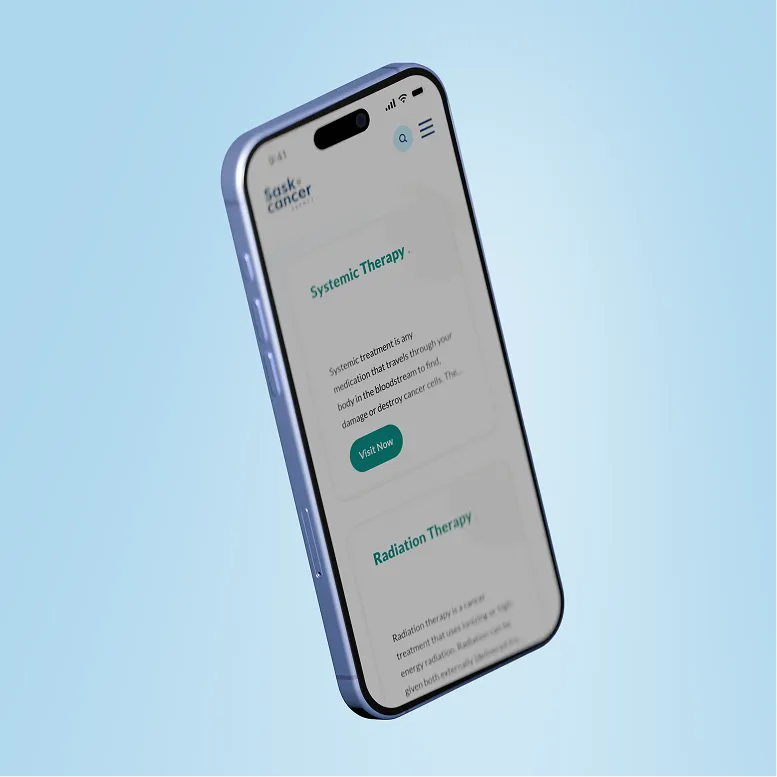
That thinking carried into the design. This isn’t casual browsing, people are often stressed, tired, overwhelmed and looking for answers quickly. The experience is built around clarity, accessibility, and restraint, so users can move forward without friction or second-guessing.
At the same time, we built the foundation to support it. A Drupal multisite platform connects the public website, staff intranet, and Healthy Future Sask microsite through a shared system of components, templates, and governance. Creating consistency across the experience while still giving each site the flexibility to serve its audience properly. Shared components reduce duplication and speed up development, structured workflows make content easier to manage, and a clear system underneath it all means the platform can evolve without becoming harder to maintain.
Not sure where to start? Tell us a bit about yourself and your product or project. With over 30 years of experience, we’ve seen it all. No matter what stage you’re in, we’ll find a way to help or guide you to someone who can.
Contact arrow_forward arrow_forward Book Meeting arrow_outward arrow_outward